Earth and Space Sciences Regents, August 2026, question 32
Tap an image to open it full size.
What the figure shows
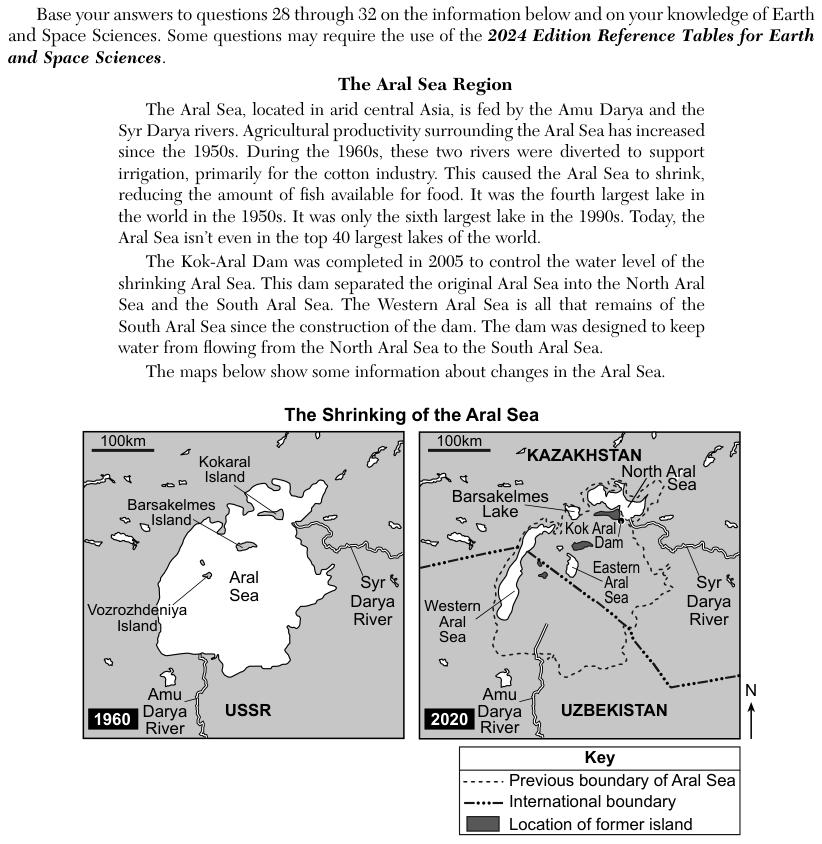
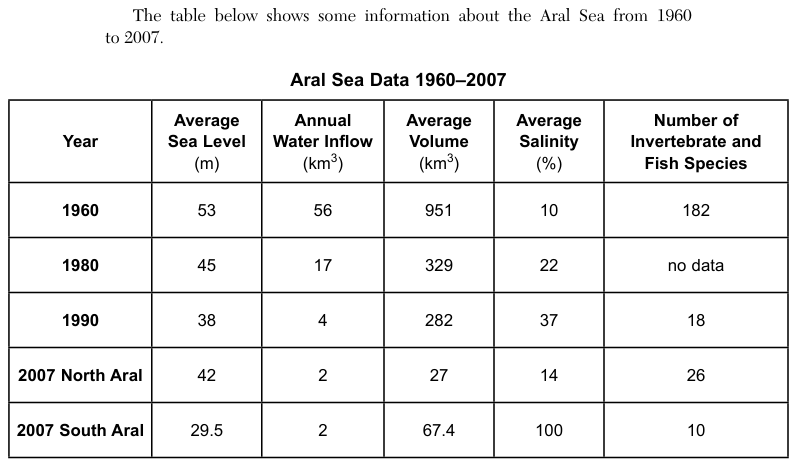
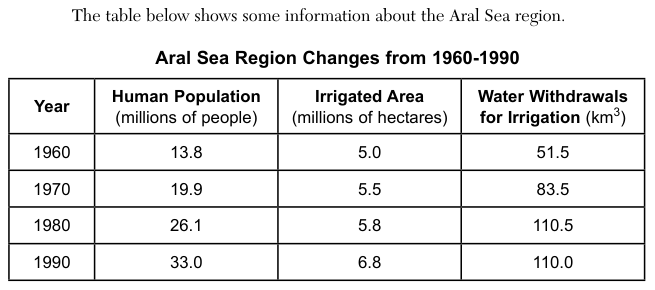
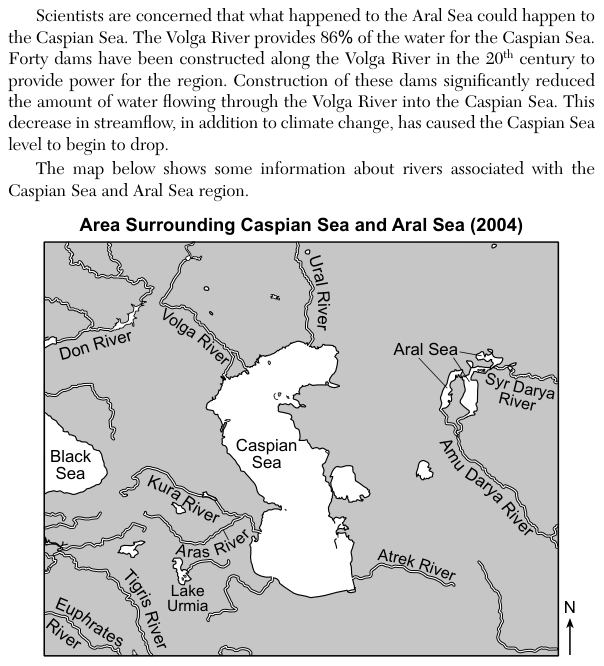
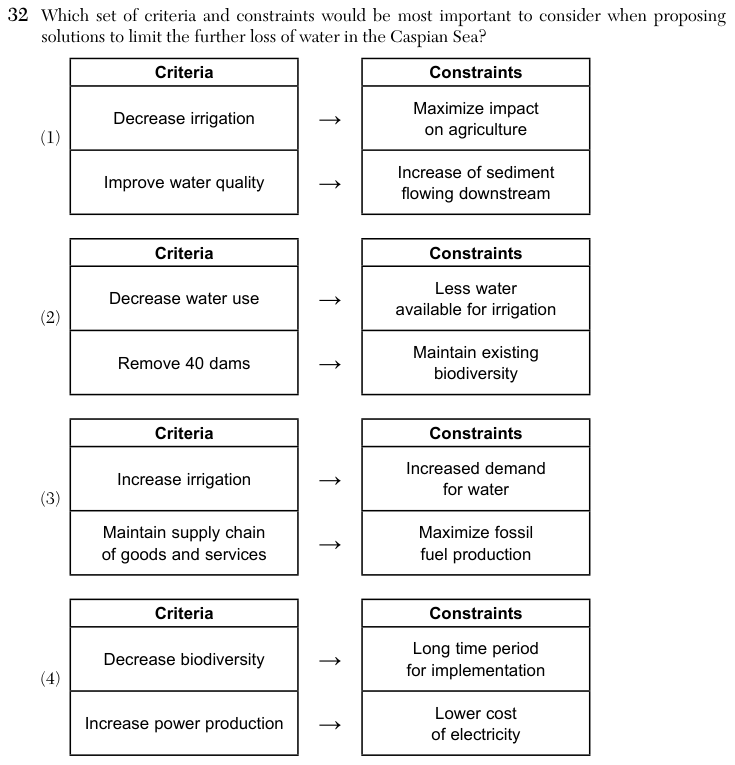
The passage says scientists fear that what happened to the Aral Sea could happen to the Caspian Sea. The Volga River provides 86% of the water for the Caspian Sea, and forty dams built along the Volga in the 20th century to provide power reduced the water flowing into the sea. This decrease in streamflow, together with climate change, has caused the Caspian Sea level to begin to drop. A 2004 map shows the Caspian Sea and Aral Sea with their rivers, and the Aral Sea tables show water withdrawals for irrigation rising as the Aral Sea shrank. Each choice is a small table with two criteria, each joined by an arrow to a constraint. Choice 1: decrease irrigation, maximize impact on agriculture; improve water quality, increase of sediment flowing downstream. Choice 2: decrease water use, less water available for irrigation; remove 40 dams, maintain existing biodiversity. Choice 3: increase irrigation, increased demand for water; maintain supply chain of goods and services, maximize fossil fuel production. Choice 4: decrease biodiversity, long time period for implementation; increase power production, lower cost of electricity.
How to think about it
In design work, a criterion is a goal the solution must meet, and a constraint is a limit or cost that comes with it. Start from the problem in the passage: what is reducing the water reaching the Caspian Sea? Then check, for each pair, whether the criterion would put more water back into the sea and whether the constraint is a real limit of that goal.
Which set of criteria and constraints would be most important to consider when proposing solutions to limit the further loss of water in the Caspian Sea?