Earth and Space Sciences Regents, August 2026, question 7
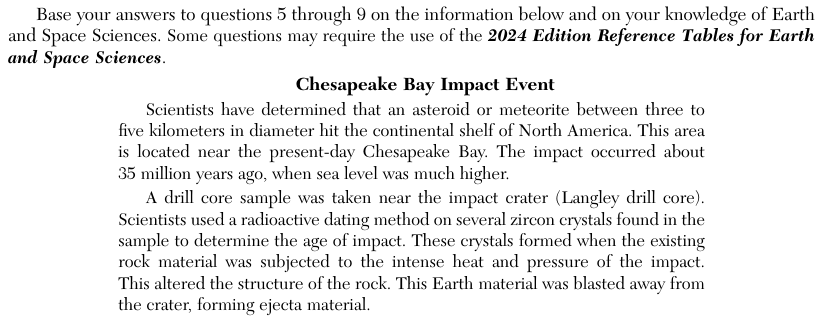

Tap an image to open it full size.
What the figure shows
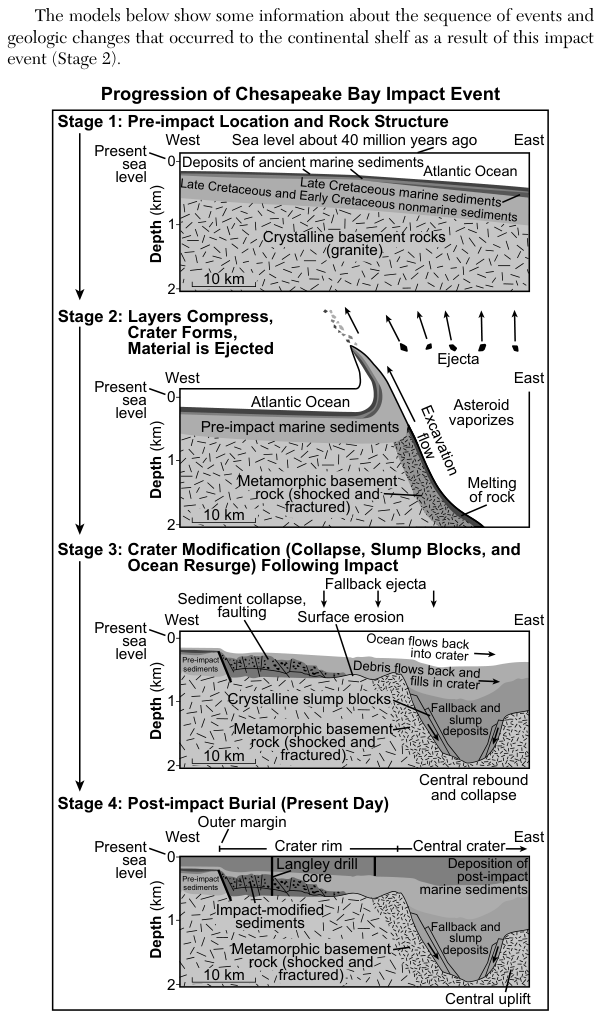
A four-stage model, Progression of Chesapeake Bay Impact Event, shows cross sections of the continental shelf, depth 0 to 2 kilometers (km), west to east. Stage 1, Pre-impact Location and Rock Structure: deposits of ancient marine sediments and Cretaceous sediments over crystalline basement rocks (granite), sea level about 40 million years ago. Stage 2, Layers Compress, Crater Forms, Material is Ejected: ejecta thrown upward, an excavation flow, asteroid vaporizes, melting of rock. Stage 3, Crater Modification (Collapse, Slump Blocks, and Ocean Resurge) Following Impact: sediment collapse and faulting, surface erosion, fallback ejecta, ocean flows back into crater, debris flows back and fills in crater, fallback and slump deposits. Stage 4, Post-impact Burial (Present Day): deposition of post-impact marine sediments over the crater rim and central crater.
How to think about it
Constructive processes build up land or add material to a place, for example by deposition. Destructive processes remove or break down material, for example by erosion or by blasting it away. The question asks about the forming of the present-day crater, so look at what happens during and after the impact. Read the labels in each stage of the model, in order.
Which two stages in the models are evidence of constructive processes associated with the formation of the present-day Chesapeake Bay crater?