Earth and Space Sciences Regents, June 2026, question 11
Tap an image to open it full size.
What the figure shows
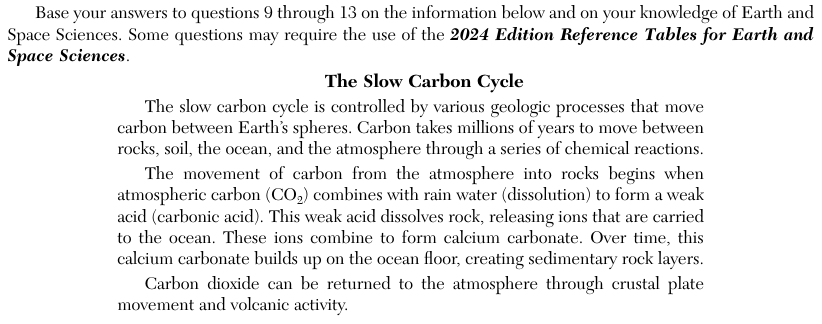
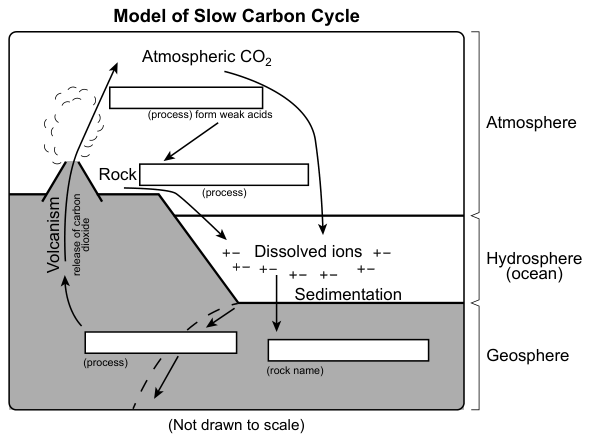
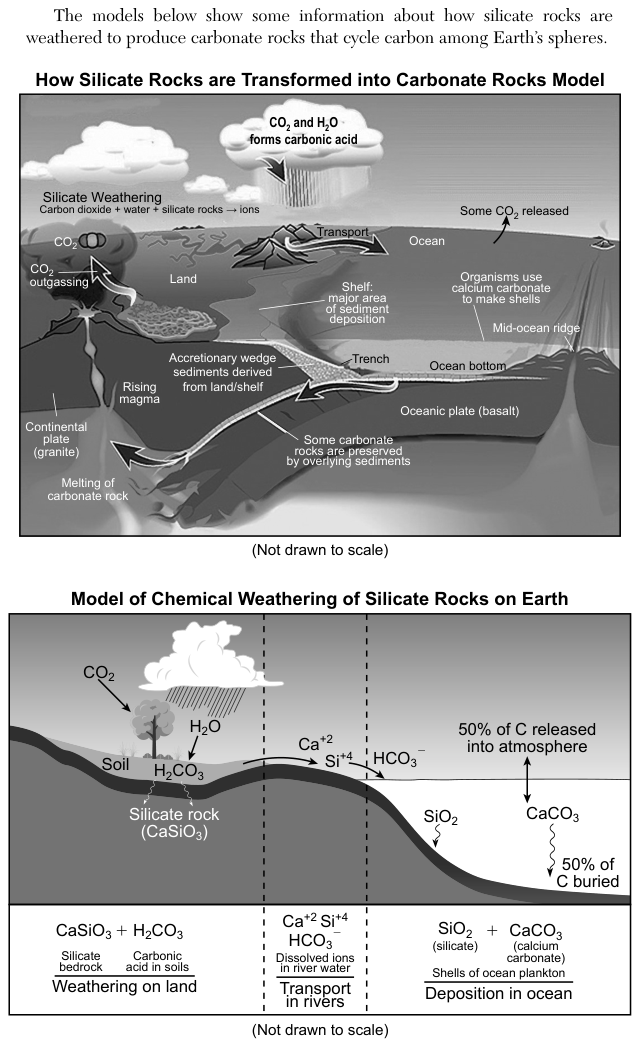
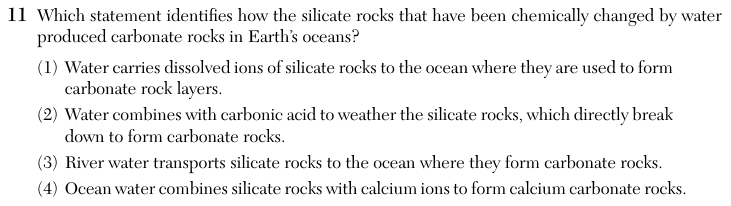
The passage The Slow Carbon Cycle says that atmospheric carbon dioxide (CO2) combines with rain water to form a weak acid (carbonic acid), which dissolves rock and releases ions that are carried to the ocean; these ions combine to form calcium carbonate, which builds up on the ocean floor as sedimentary rock layers. The Model of Chemical Weathering of Silicate Rocks on Earth shows three zones: Weathering on land (CaSiO3 silicate bedrock plus H2CO3 carbonic acid in soils), Transport in rivers (Ca+2, Si+4 and HCO3- as dissolved ions in river water), and Deposition in ocean (SiO2 silicate plus CaCO3 calcium carbonate, labelled shells of ocean plankton). The question gives four statements about how silicate rocks changed by water lead to carbonate rocks in the ocean.
How to think about it
Read the three zones of the Model of Chemical Weathering of Silicate Rocks: weathering on land, transport in rivers and deposition in the ocean. Then compare each statement with all three zones, checking what it says happens and where.
Which statement identifies how the silicate rocks that have been chemically changed by water produced carbonate rocks in Earth’s oceans?
Choice 1 is right. Carbonic acid in soil water reacts with silicate rock and releases dissolved ions such as calcium (Ca+2) and bicarbonate (HCO3-). Rivers carry these ions to the ocean, where ocean organisms use them to build calcium carbonate shells. The shells settle and build up as carbonate rock layers.
Carbonic acid in water does weather silicate rock. However, carbonate rock does not form directly from that breakdown: the rock first dissolves into ions that rivers carry to the ocean. This choice may come from skipping the dissolved-ion and transport steps.
Rivers in the model carry dissolved ions, not pieces of silicate rock. Pieces of silicate rock carried to the ocean stay silicate sediment. This choice may come from mixing up transport of solid sediment with transport of dissolved ions.
The weathering of silicate rock takes place on land in the soil, where carbonic acid attacks it. In the ocean, calcium ions combine with bicarbonate ions, not with silicate rock, to form calcium carbonate. This choice may come from moving the weathering step into the ocean.