Earth and Space Sciences Regents, June 2025, question 38
Tap an image to open it full size.
What the figure shows
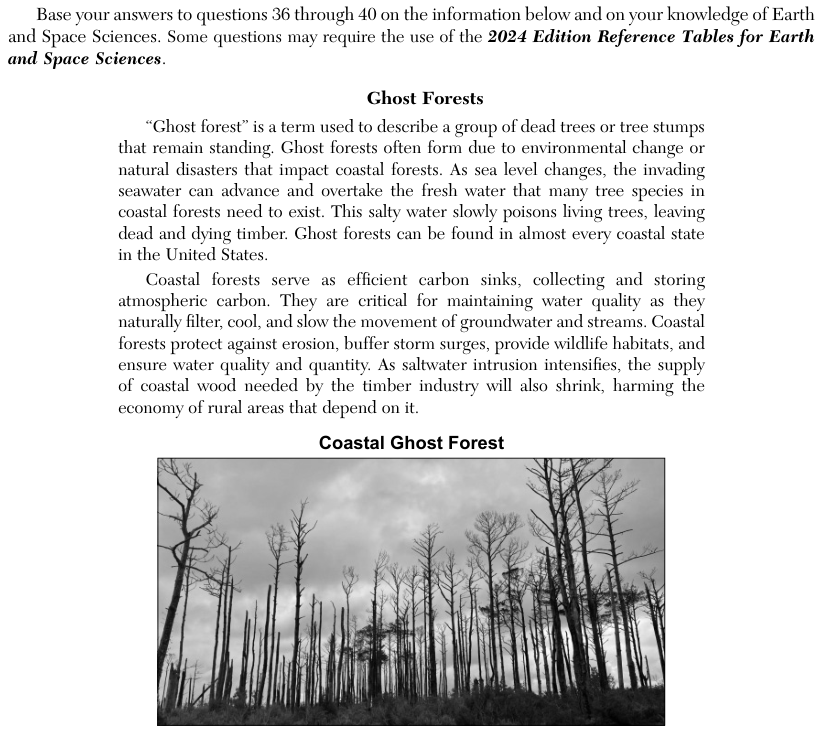
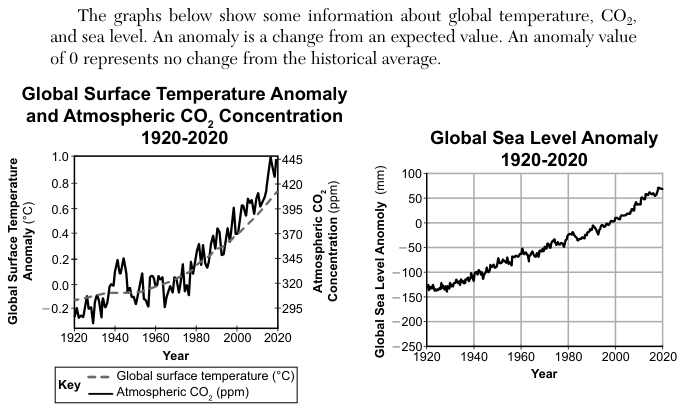
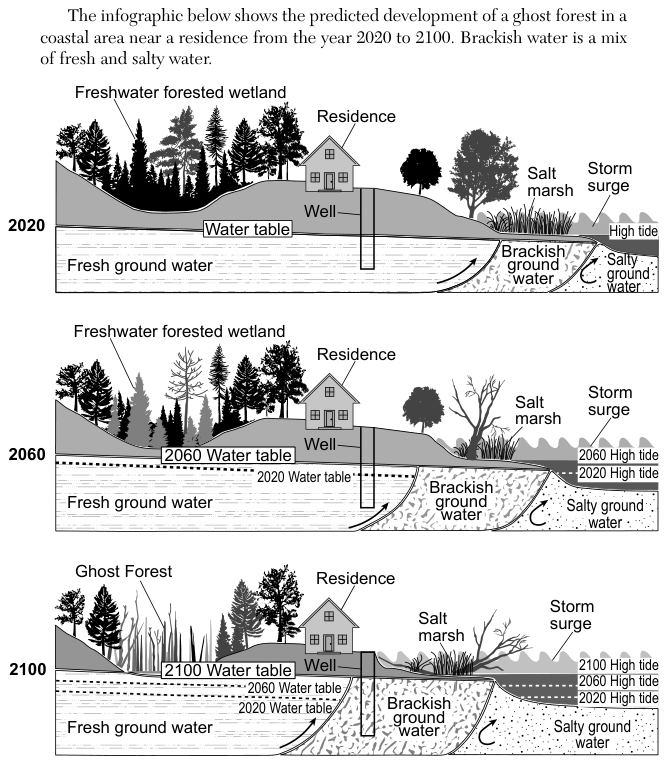
The passage says coastal forests store carbon, filter, cool and slow the movement of groundwater and streams, protect against erosion, buffer storm surges and provide wildlife habitats. An infographic shows a coastal area near a residence in 2020, 2060 and 2100. Over time the high tide rises, the water table rises, brackish and salty groundwater move inland under the residence, and part of the freshwater forested wetland is labeled Ghost Forest by 2100.
How to think about it
List what the passage says living coastal forests and the plants under them do. Then ask which of those jobs stops when the trees and plants die, and what follows in the Earth system. Check each statement against the passage and the infographic.
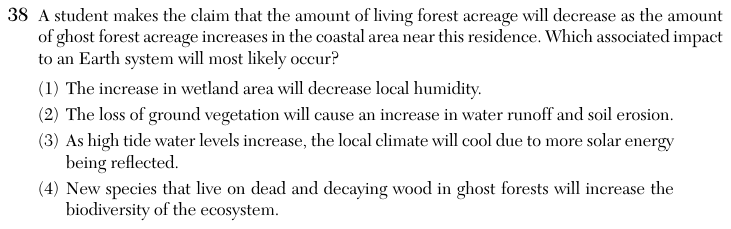
A student makes the claim that the amount of living forest acreage will decrease as the amount of ghost forest acreage increases in the coastal area near this residence. Which associated impact to an Earth system will most likely occur?
Choice 2 is right. The passage says coastal forests protect against erosion and slow the movement of water. When the trees and the plants beneath them die, as the roots decay they gradually stop holding the soil together, and less water is taken up. More rain runs off the surface and carries soil away.
More wetland means more open water to evaporate, which tends to raise local humidity, not lower it. This choice reverses the effect of added surface water.
Water absorbs more sunlight than most land surfaces and reflects less. Higher tides over a coastal area would not cool the local climate by reflection. This choice may come from mixing up water with bright surfaces such as ice or snow.
Some organisms do live on dead wood, but the passage says coastal forests provide wildlife habitats, and those are lost when the forest dies. The loss of a living forest is not most likely to raise biodiversity.