Earth and Space Sciences Regents, June 2025, question 40
Tap an image to open it full size.
What the figure shows
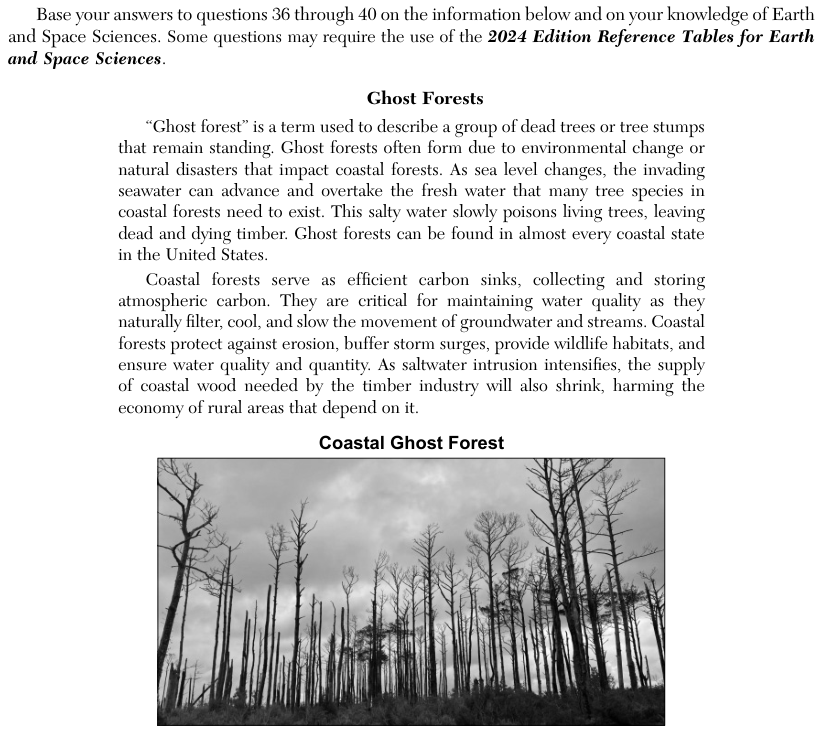
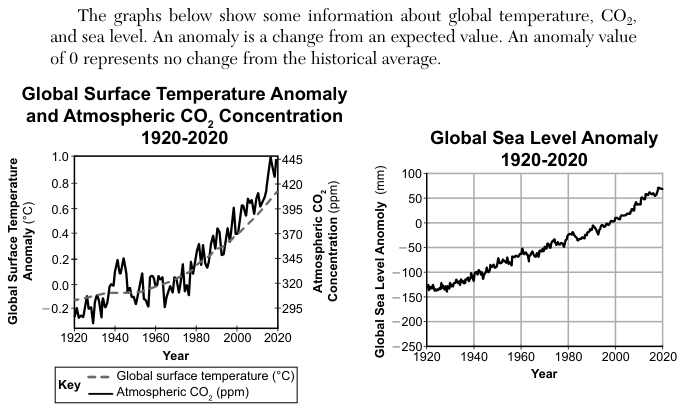
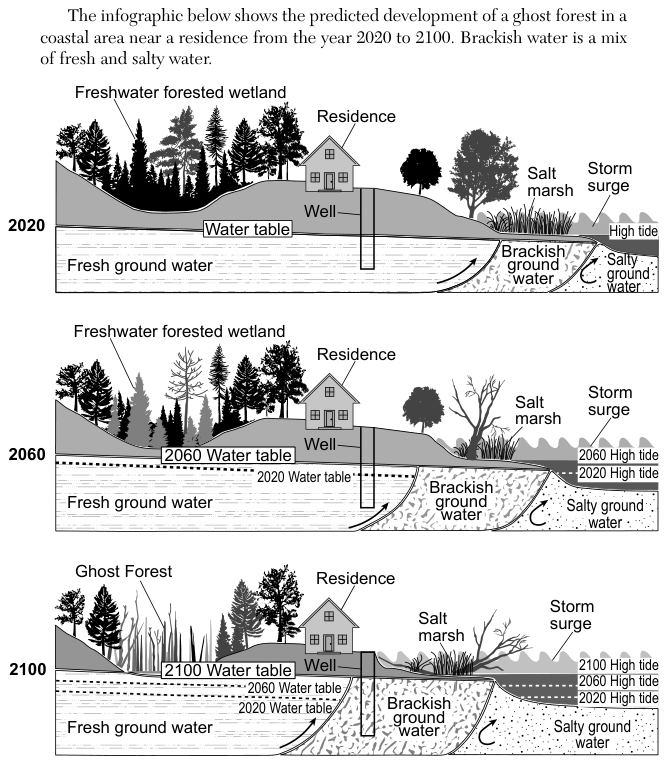
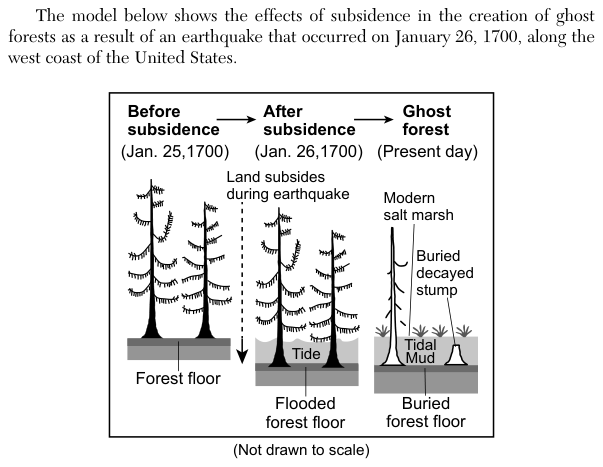
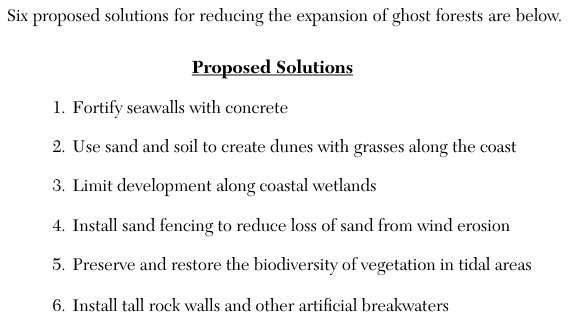
The passage lists six proposed solutions for reducing the expansion of ghost forests: 1. Fortify seawalls with concrete. 2. Use sand and soil to create dunes with grasses along the coast. 3. Limit development along coastal wetlands. 4. Install sand fencing to reduce loss of sand from wind erosion. 5. Preserve and restore the biodiversity of vegetation in tidal areas. 6. Install tall rock walls and other artificial breakwaters. Each answer choice is a set of three solution numbers. Other context pages describe ghost forests, rising sea level and saltwater intrusion, and a model of land that sank during an earthquake in 1700.
How to think about it
The stem sets three tests: the solution must slow the spread of ghost forests, change the environment as little as possible, and look good to people living nearby. Go through the six solutions one at a time and mark which pass all three tests. Then find the choice that lists your three numbers.
Which three proposed solutions reduce the expansion of ghost forests and would most likely be accomplished with minimal environmental impact and maximum aesthetic value to local residents?
Choice 4 is right. Dunes with grasses (2) and restored tidal vegetation (5) use natural materials and living plants that slow salt water and hold sediment, and they keep the look of a natural coast. Limiting development (3) protects the coastal wetlands that buffer storm surges, without building anything. Limiting development keeps this wetland buffer in place rather than reducing saltwater intrusion itself. All three solutions change the environment very little.
Solution 1 adds concrete seawalls, a large built structure that changes the shore and blocks the view. Sand fencing (4) can help build and keep dunes that slow salt water. On its own, a fence does not hold back salt water. Dunes with grasses and restored tidal vegetation slow salt water directly, and limits on development keep the wetlands that buffer the coast.
Solutions 1 and 6 are both hard structures of concrete or rock that change the coast and are unattractive to many residents. Sand fencing (4) can help keep dunes in place, but on its own it does less against salt water moving inland than dunes with grasses or restored tidal vegetation.
Solutions 2 and 5 fit, but Solution 6 adds tall rock walls and artificial breakwaters. These change the shoreline and the movement of sediment, and they block the view of the coast.