Earth and Space Sciences Regents, June 2025, question 13
Tap an image to open it full size.
What the figure shows
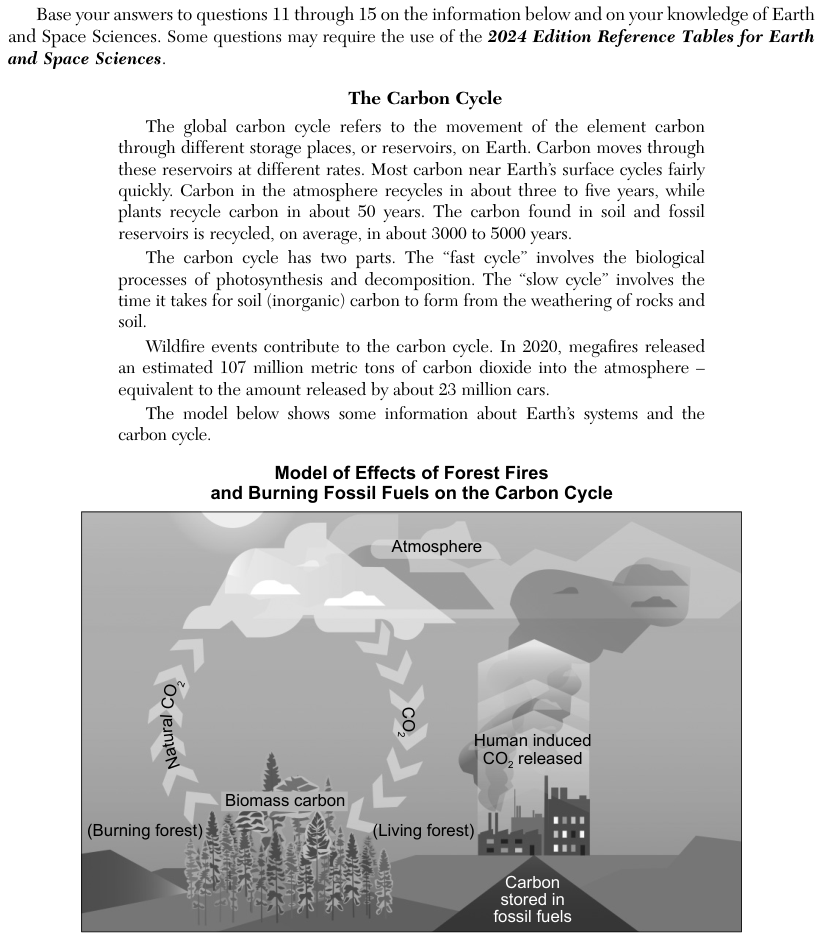
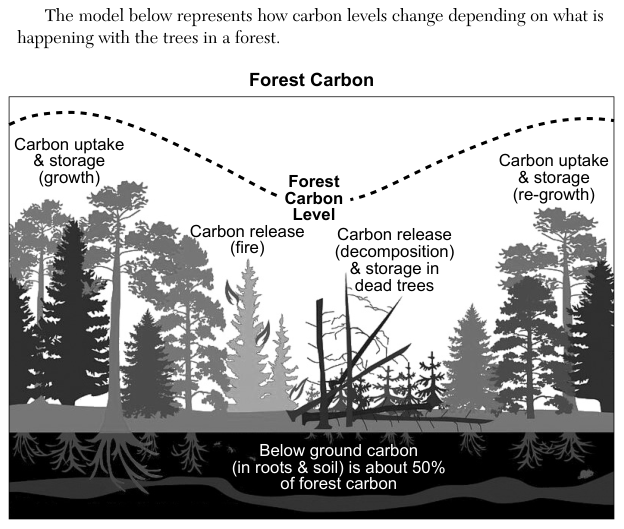
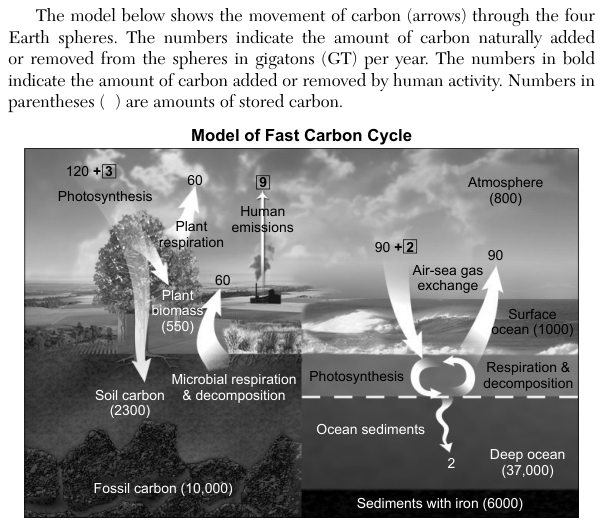
The passage describes the carbon cycle, the fast and slow parts of it, and the large amount of carbon dioxide (CO2) released by wildfires in 2020. One model shows carbon moving between the atmosphere, living and burning forests, and fossil fuels burned by factories. A second model, Forest Carbon, shows the carbon level of a forest rising during growth, falling during fire and decomposition, and rising again during regrowth; about half of forest carbon is below ground in roots and soil.
How to think about it
Read the stem carefully: it asks how people have responded to a warming climate caused by more carbon dioxide. Read what each statement claims people did. Then check whether the passage and the two models give evidence for that action. The Forest Carbon model shows what a forest does to carbon during growth, fire and regrowth.
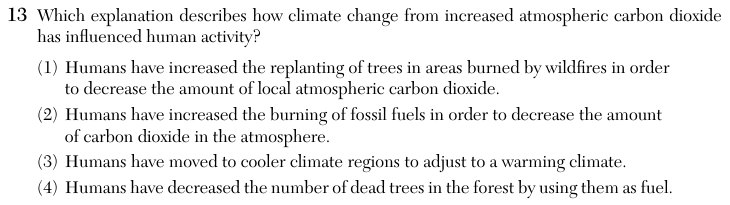
Which explanation describes how climate change from increased atmospheric carbon dioxide has influenced human activity?
Choice 1 is right. The Forest Carbon model shows that growing and regrowing trees take carbon dioxide out of the air through photosynthesis and store it. Replanting burned areas is a human response to climate change that speeds up this uptake and lowers the amount of carbon dioxide in the atmosphere.
Burning fossil fuels releases carbon dioxide into the atmosphere, as the human-induced arrow in the first model shows. It raises the amount instead of lowering it, so this choice reverses cause and effect.
The passage and the models give no evidence about people moving to cooler regions. The question asks which response the information supports, and this choice is not supported by the information given.
Burning dead trees as fuel releases their stored carbon to the atmosphere at once. This choice confuses removing dead wood from the forest with removing carbon from the air.