Earth and Space Sciences Regents, August 2026, question 37
Tap an image to open it full size.
What the figure shows
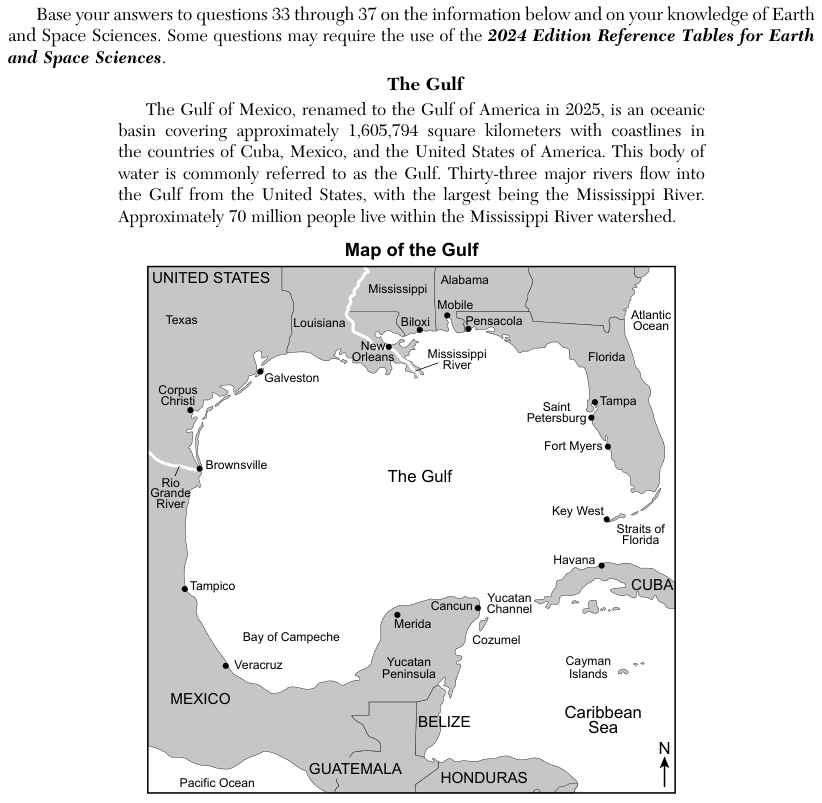
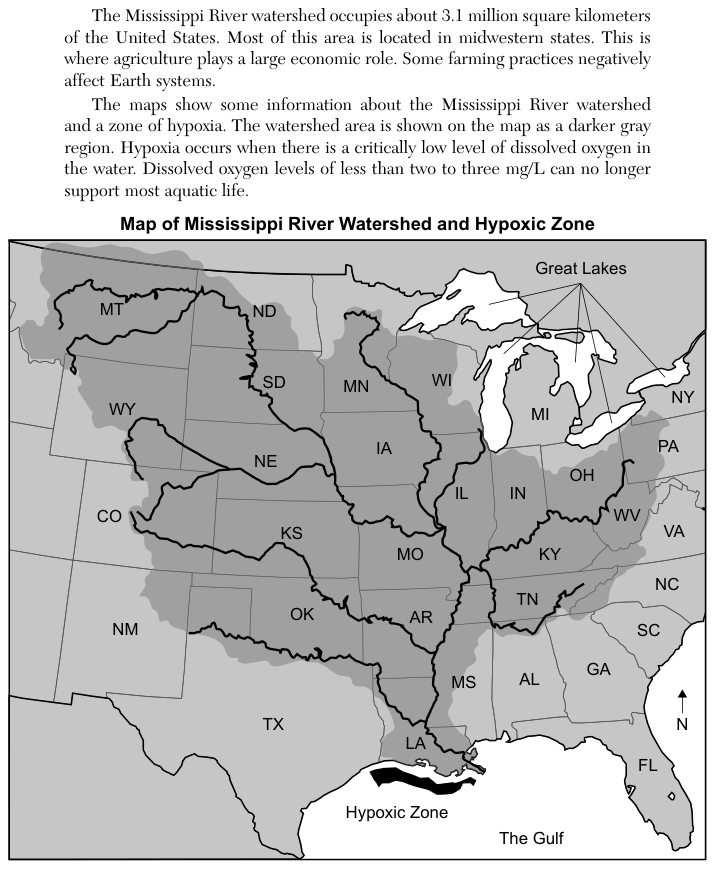
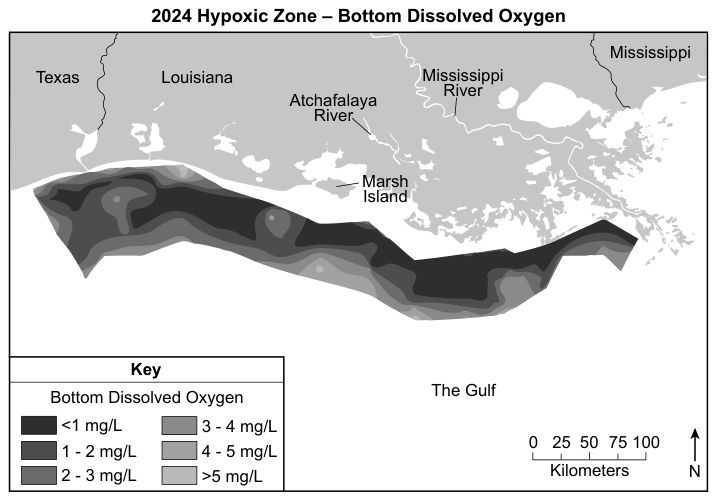
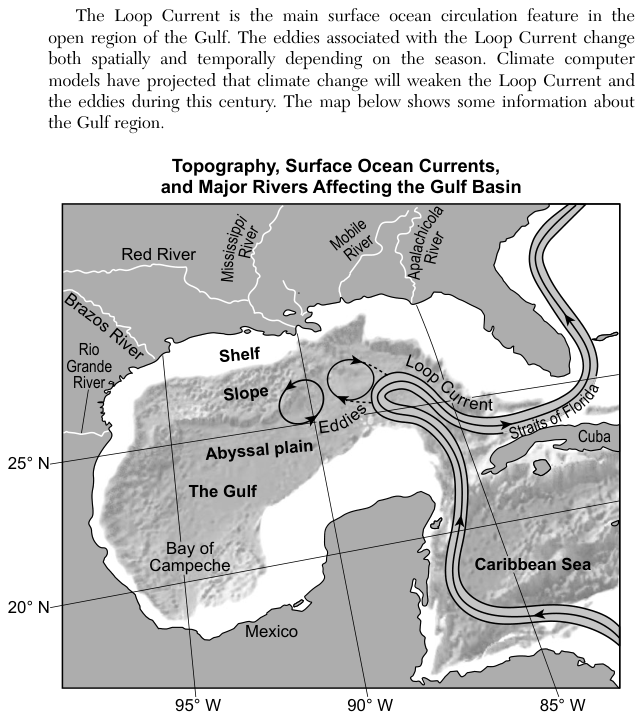
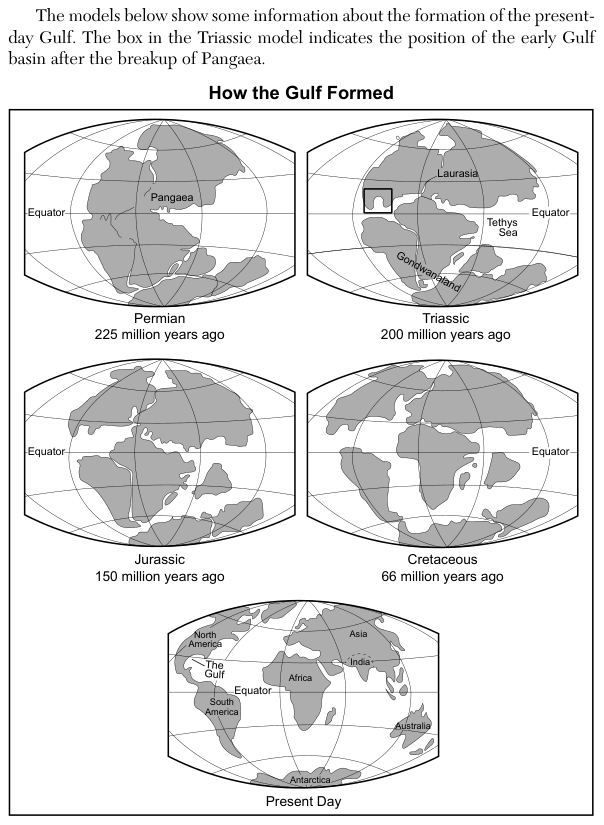
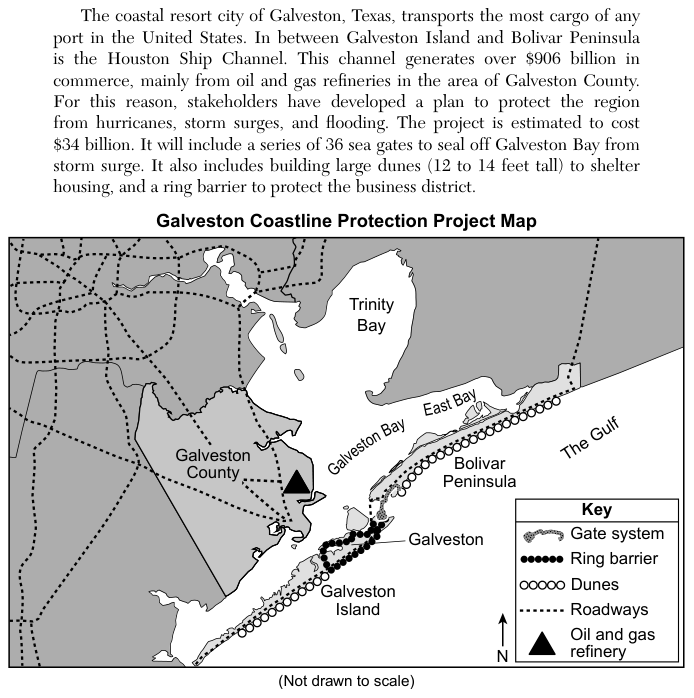
The passage describes the Gulf (the Gulf of Mexico, renamed the Gulf of America in 2025), the Mississippi River watershed and a hypoxic zone (an area of very low dissolved oxygen) off Louisiana. Later passages say the Loop Current is the main surface ocean circulation feature in the open Gulf and that climate computer models project climate change will weaken the Loop Current and its eddies during this century. Other parts show how the Gulf formed after the breakup of Pangaea and a plan to protect Galveston, Texas, from hurricanes, storm surges and flooding. The question gives four pairs of factors and asks which two are mostly responsible for the changing atmospheric and oceanic circulation patterns in the Gulf.
How to think about it
Look for the pair of factors that act on the whole ocean and atmosphere, not on one place. Ask whether each factor is a cause of a change in circulation or an effect that follows from it, and whether it can reach the open water of the Gulf.
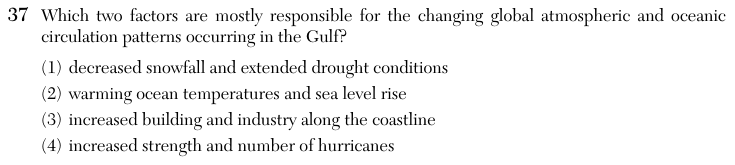
Which two factors are mostly responsible for the changing global atmospheric and oceanic circulation patterns occurring in the Gulf?
Choice 2 is right. A warming climate warms the ocean surface, which changes the temperature differences that drive winds and currents, and the passage says climate change is projected to weaken the Loop Current. Choice 2 names warming ocean temperatures, which can change winds and currents. Sea level rise in the same choice is mainly a result of that warming rather than a driver, as warming water expands and land ice melts. Choice 2 is still the best pair, because the other three choices name local or unrelated causes, or a result of warming rather than a cause.
Snowfall and drought are land and weather conditions in some regions. They do not drive the currents of the open Gulf.
Building and industry along the coast change the land at the shore. They are local and do not change the large-scale circulation of the air and ocean.
Warmer ocean water can make hurricanes stronger, so stronger hurricanes are a result of the warming, not a cause of the long-term change in circulation. This choice may come from mixing up an effect with its cause.