Earth and Space Sciences Regents, August 2026, question 22
Tap an image to open it full size.
What the figure shows
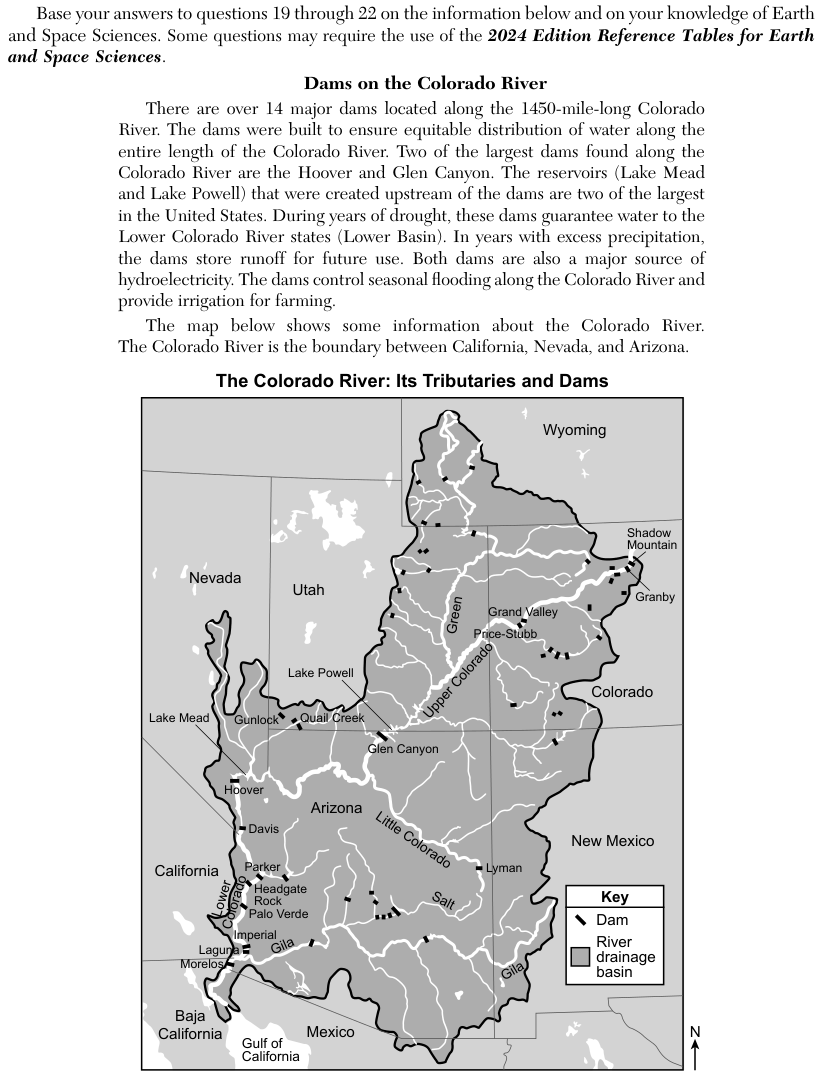
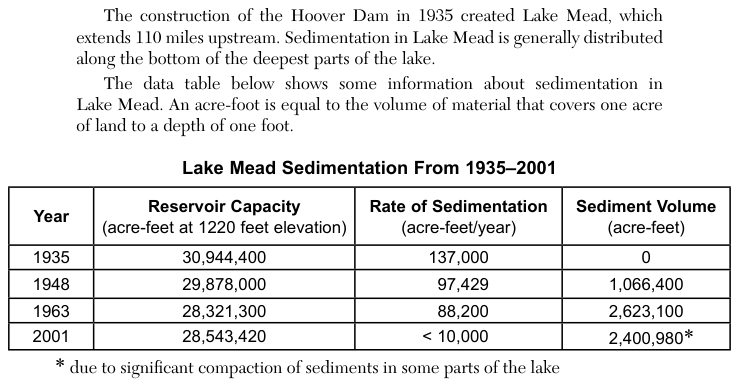
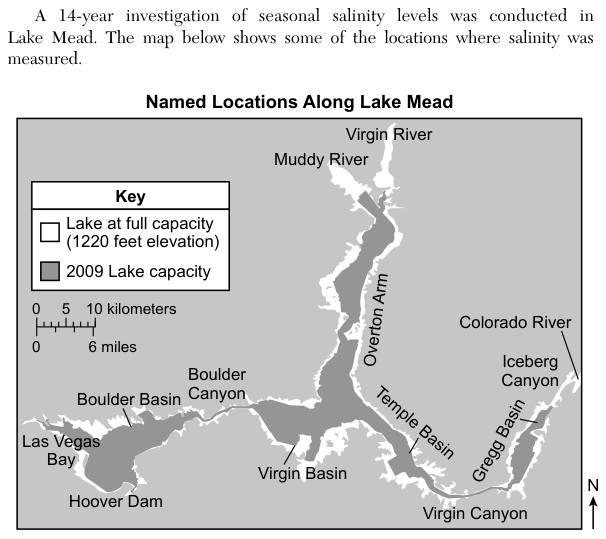
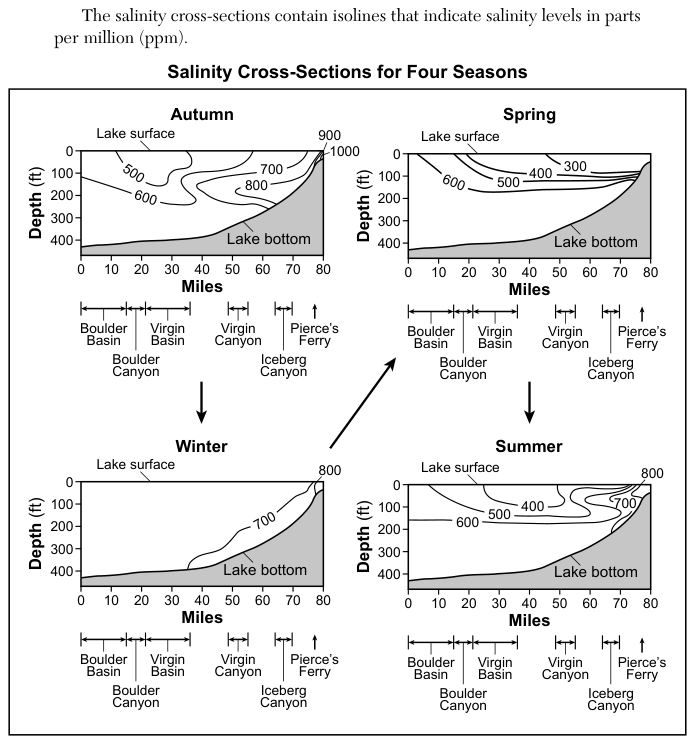
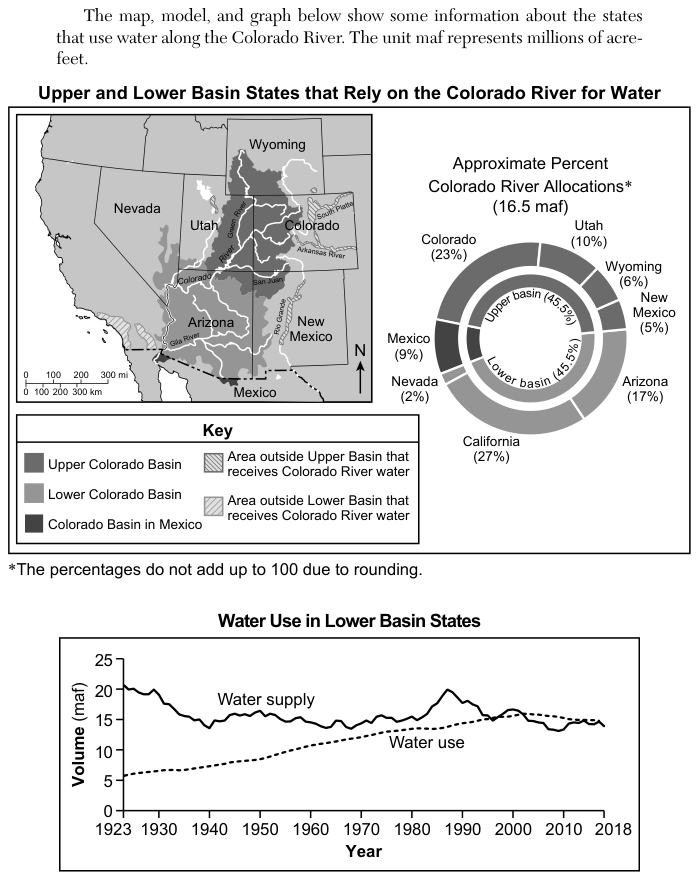
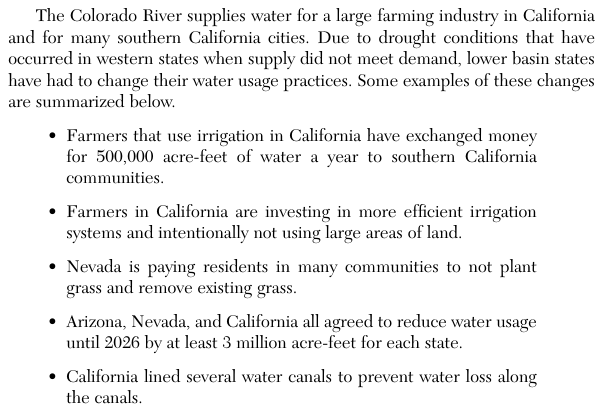
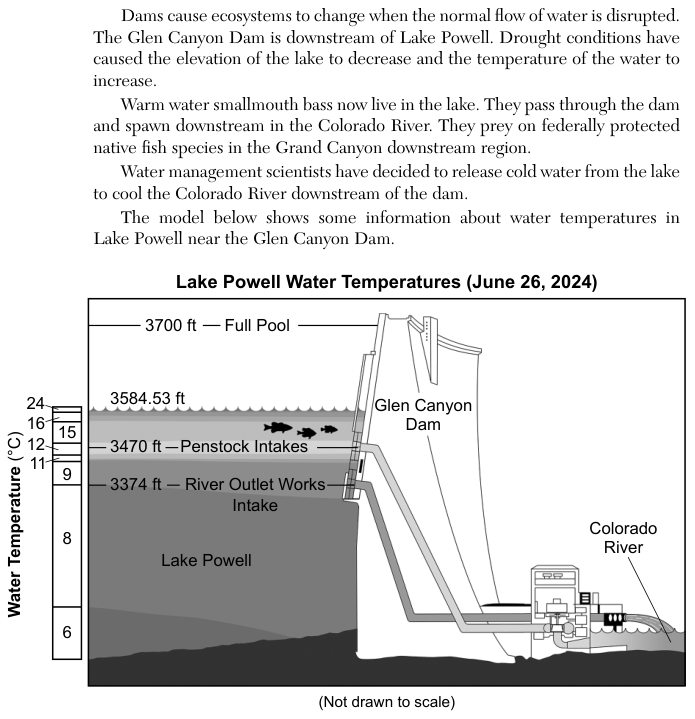
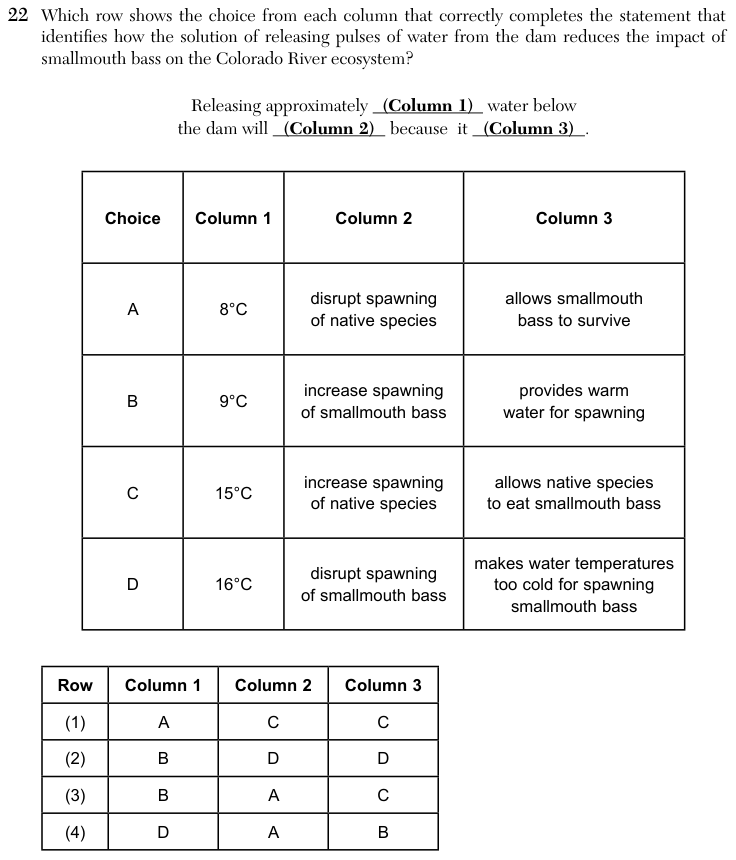
The passage says drought lowered Lake Powell and warmed its water; warm-water smallmouth bass now pass through the Glen Canyon Dam, spawn downstream and prey on protected native fish; scientists decided to release cold water from the lake to cool the river below the dam. A model, Lake Powell Water Temperatures (June 26, 2024), shows the lake beside the dam with a water temperature scale in degrees Celsius (°C). From the surface down, the scale bands are labelled 24, 16, 15, 12, 11, 9, 8 and 6. The lake surface is at 3584.53 feet, fish are drawn in the 15 band, the Penstock Intakes are at 3470 feet near the 12 mark, and the River Outlet Works Intake is at 3374 feet, level with the 9 band. The question gives a table of options. Column 1: A 8°C, B 9°C, C 15°C, D 16°C. Column 2: A disrupt spawning of native species, B increase spawning of smallmouth bass, C increase spawning of native species, D disrupt spawning of smallmouth bass. Column 3: A allows smallmouth bass to survive, B provides warm water for spawning, C allows native species to eat smallmouth bass, D makes water temperatures too cold for spawning smallmouth bass. The four answer rows are (1) A, C, C; (2) B, D, D; (3) B, A, C; (4) D, A, B.
How to think about it
Fill the sentence one blank at a time. For Column 1, find each intake on the model, note its elevation, and read the temperature scale at that level. For Columns 2 and 3, reread the passage to see which fish the release is meant to work against and what the passage says about the water each kind of fish lives in.
Which row shows the choice from each column that correctly completes the statement that identifies how the solution of releasing pulses of water from the dam reduces the impact of smallmouth bass on the Colorado River ecosystem? Releasing approximately (Column 1) water below the dam will (Column 2) because it (Column 3) . Choice Column 1 Column 2 Column 3 A 8°C disrupt spawning of native species allows smallmouth bass to survive B 9°C increase spawning of smallmouth bass provides warm water for spawning C 15°C increase spawning of native species allows native species to eat smallmouth bass D 16°C disrupt spawning of smallmouth bass makes water temperatures too cold for spawning smallmouth bass Row Column 1 Column 2 Column 3