Earth and Space Sciences Regents, January 2026, question 43
Tap an image to open it full size.
What the figure shows
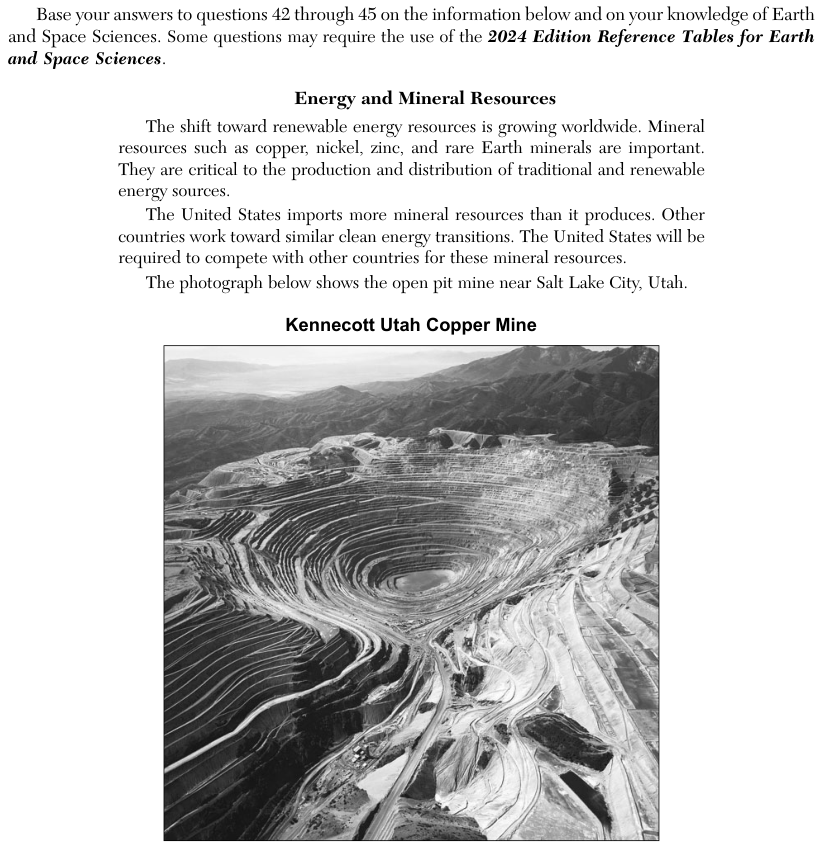
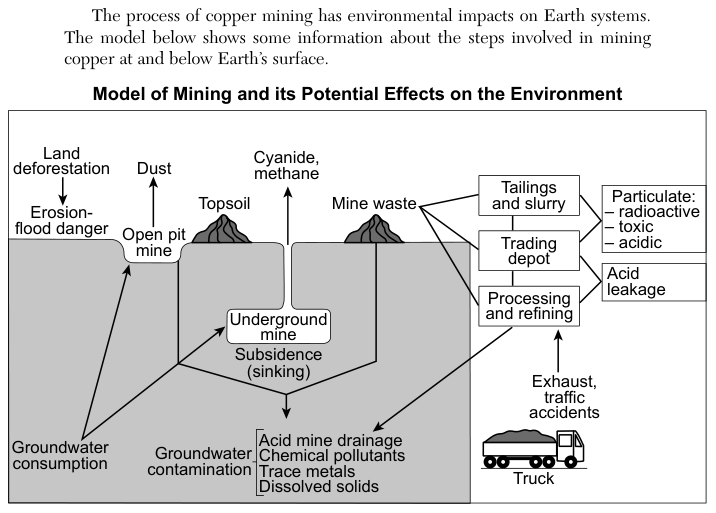
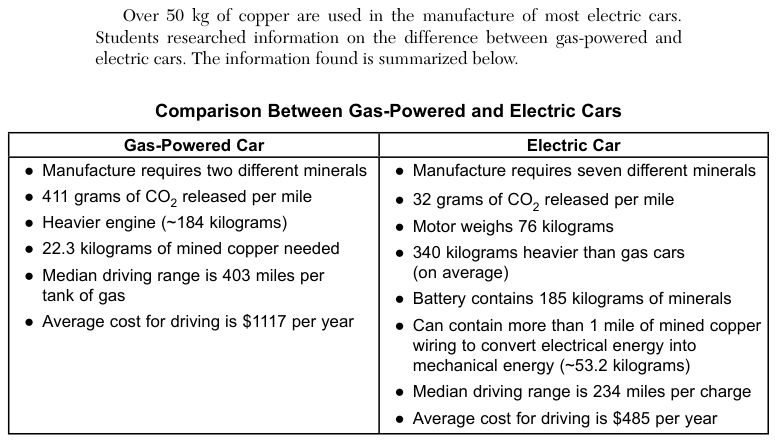
The passage says copper, nickel, zinc and rare Earth minerals are needed for traditional and renewable energy, and a photograph shows the Kennecott Utah Copper Mine, a very large open pit with stepped walls. The Model of Mining and its Potential Effects on the Environment shows open pit and underground mines with effects such as land deforestation, dust, cyanide and methane, mine waste, tailings, acid leakage, subsidence (sinking), and groundwater consumption and contamination. The table Comparison Between Gas-Powered and Electric Cars lists, for the gas-powered car: two different minerals needed, 411 grams of carbon dioxide (CO2) released per mile, a heavier engine (about 184 kilograms), 22.3 kilograms of mined copper, a median driving range of 403 miles per tank, and an average driving cost of $1117 per year. For the electric car it lists: seven different minerals, 32 grams of CO2 per mile, a motor of 76 kilograms, 340 kilograms heavier than gas cars on average, a battery with 185 kilograms of minerals, more than 1 mile of mined copper wiring (about 53.2 kilograms), a median driving range of 234 miles per charge, and an average driving cost of $485 per year.
How to think about it
The stem asks about two things at once: the impact from mining and the range for long trips. Find the rows in the table that measure how much mined material each car needs and how far each car can go. Then check that both reasons in a statement match those rows and are about the right kind of impact.
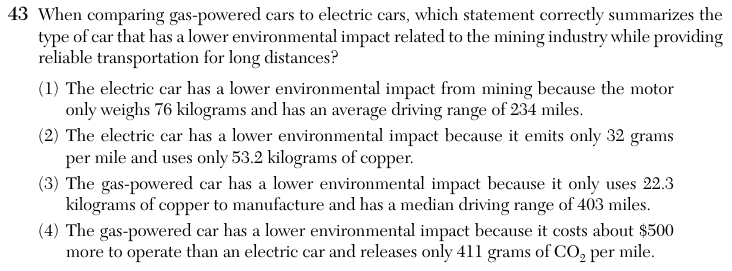
When comparing gas-powered cars to electric cars, which statement correctly summarizes the type of car that has a lower environmental impact related to the mining industry while providing reliable transportation for long distances?
Choice 3 is right. The gas-powered car needs 22.3 kilograms of mined copper and two different minerals, while the electric car needs about 53.2 kilograms of copper and seven different minerals. Less mining means less of the damage shown in the mining model. The gas-powered car also has the longer median driving range, 403 miles compared with 234 miles, so it is more reliable for long distances.
The weight of the motor does not measure how much material is mined, and the electric car needs more copper and more kinds of minerals. Its range of 234 miles is also shorter than the gas car's 403 miles.
The 32 grams of carbon dioxide per mile is the table's per-mile emissions estimate, not an impact of mining. An electric car releases nothing from its motor while driving, so this figure must count the carbon dioxide released in making its electricity. The electric car's 53.2 kilograms of copper is more than twice the gas car's 22.3 kilograms, so "only" reverses the comparison. This choice may come from mixing per-mile emissions with the impact of mining.
The cost of driving is money, not an environmental impact. 411 grams of carbon dioxide per mile is more than the electric car's 32 grams, and it is an emission from driving, not from mining.