Earth and Space Sciences Regents, August 2025, question 22
Tap an image to open it full size.
What the figure shows
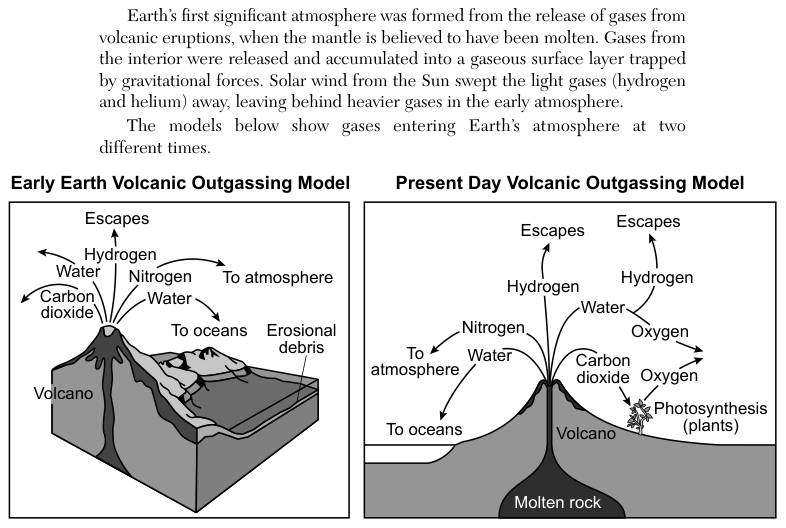
The passage says Earth's first significant atmosphere formed from gases released by volcanic eruptions, and that solar wind swept the light gases (hydrogen and helium) away, leaving heavier gases. The Early Earth Volcanic Outgassing Model shows a volcano releasing hydrogen (arrow labelled Escapes), water, nitrogen and carbon dioxide, with arrows labelled To atmosphere and To oceans. The Present Day Volcanic Outgassing Model shows a volcano over molten rock releasing hydrogen and water (arrows to Escapes), nitrogen, water and carbon dioxide (To atmosphere, To oceans). Oxygen arrows come from water and from plants labelled Photosynthesis (plants).
How to think about it
Check each statement against the arrows in the two models and the sentences in the passage. A supported statement must match where each gas is shown going and where it comes from. Watch for words such as all and directly, which make a claim much stronger.
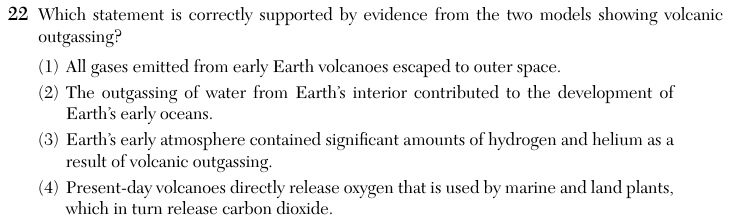
Which statement is correctly supported by evidence from the two models showing volcanic outgassing?
Choice 2 is right. The Early Earth model shows water released by the volcano with an arrow labelled To oceans. Water vapour that came out of Earth's interior cooled, condensed and collected at the surface, adding to the early oceans.
Only hydrogen is shown escaping in the early Earth model. Nitrogen, water and carbon dioxide stay, going to the atmosphere or to the oceans. The word all makes this statement false.
The passage says solar wind swept the light gases hydrogen and helium away. Hydrogen escapes in the model, and helium is not shown at all. So the early atmosphere kept the heavier gases instead.
In the present-day model, oxygen comes from plants through photosynthesis and from water, not straight from the volcano. Plants take in carbon dioxide and release oxygen. This choice reverses the direction of both gases.