Earth and Space Sciences Regents, June 2025, question 33
Tap an image to open it full size.
What the figure shows
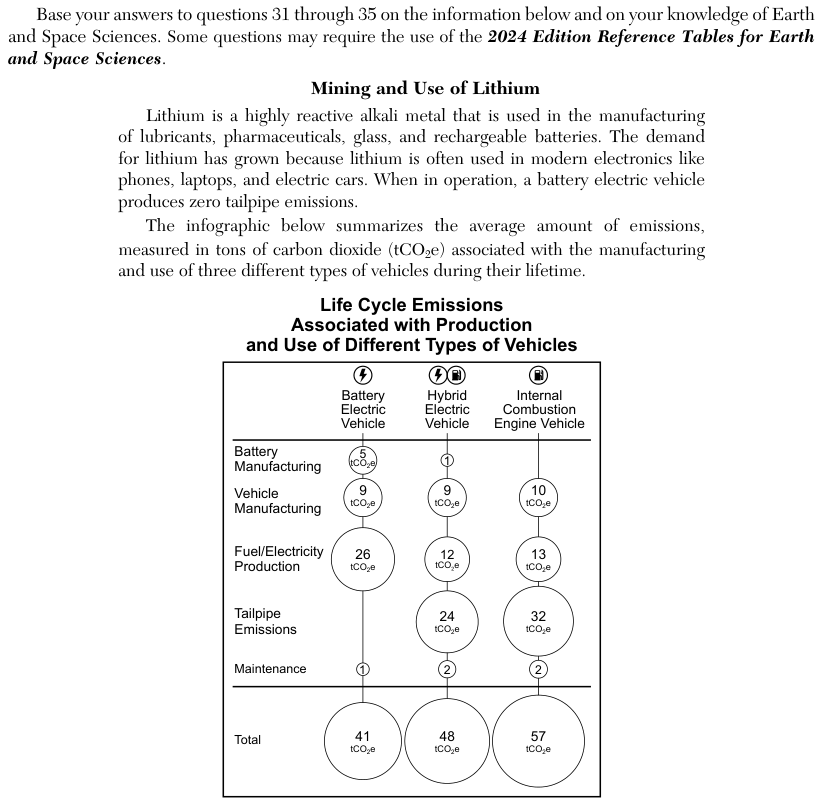
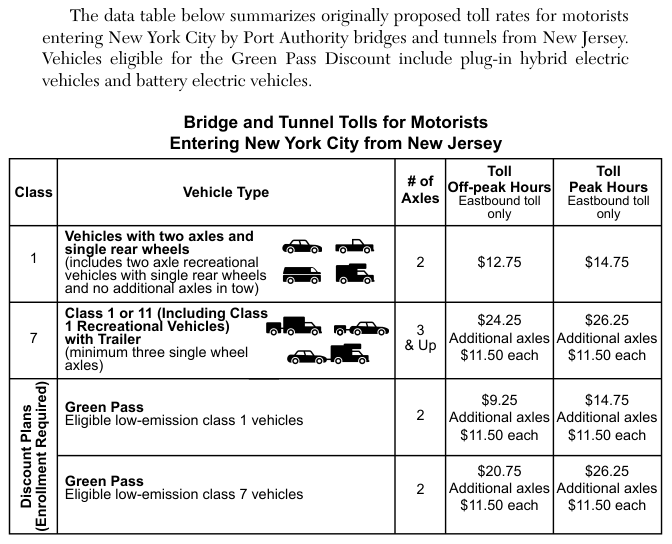
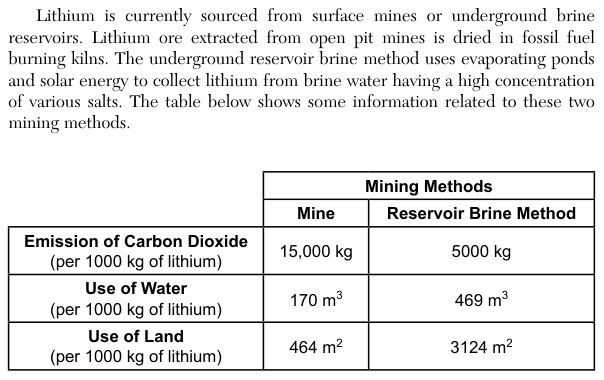
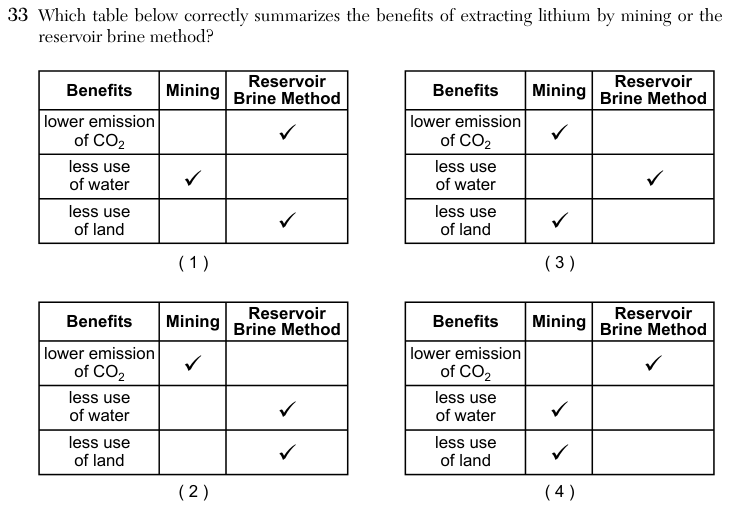
The passage says lithium comes from open pit mines or from underground brine reservoirs. A table compares the two methods per 1000 kilograms (kg) of lithium. Emission of carbon dioxide (CO2): mine 15,000 kg, reservoir brine method 5000 kg. Use of water: mine 170 cubic meters (m3), brine method 469 m3. Use of land: mine 464 square meters (m2), brine method 3124 m2. Each of the four answer choices is a small table with the rows 'lower emission of CO2', 'less use of water' and 'less use of land', and one check mark per row under either Mining or Reservoir Brine Method. Choice 1 checks brine for CO2, mining for water, brine for land. Choice 2 checks mining for CO2, brine for water, brine for land. Choice 3 checks mining for CO2, brine for water, mining for land. Choice 4 checks brine for CO2, mining for water, mining for land. The other context pages show a vehicle emissions infographic and a bridge and tunnel toll table.
How to think about it
Use the table in the passage that compares Mine and Reservoir Brine Method. For each method, find three numbers: the carbon dioxide released, the water used and the land used. Then look at how each answer table is laid out, with the three benefits as rows and the two methods as columns.
Which table below correctly summarizes the benefits of extracting lithium by mining or the reservoir brine method?